
Products
Custom & jacquard knitwear
Produksee develops custom knitwear in Indonesia, including jacquard, intarsia, stripe and pointelle structures knitted from a brand's own artwork. Development runs from artwork translation through swatch and counter-sample to bulk production, for export and domestic fashion brands.
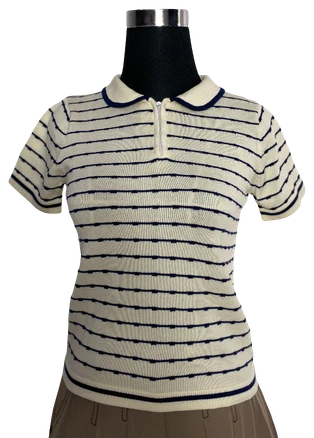
The problem
In a jacquard, the pattern is not printed onto the garment — it is the garment. The colour changes are structural, which is why a jacquard cannot be corrected after knitting and why the swatch stage is where the money is actually spent.
Development
How a custom structure gets made
Custom development is a sequence of physical checks. Each one exists to catch a problem while it is still cheap.
- 01
Artwork translation
Your artwork is redrawn as a stitch structure at your gauge. A repeat that works in a vector file often does not divide evenly into a needle bed, and this is where that is resolved.
- 02
Swatch
A physical swatch in the intended yarn. Colour, scale and handfeel all read differently in yarn than on screen — this is the stage where the design is still free to change.
- 03
Counter-sample
A full garment in the approved structure. Fit, panel placement and pattern matching across seams are confirmed here.
- 04
Bulk
Production against the approved counter-sample, with the structure locked. After this point a pattern change means re-knitting.
Techniques
Structures we knit
Jacquard
Multi-colour patterning knitted into the fabric, with the unused colours carried on the reverse. Best for repeating patterns across a whole panel.
Intarsia
Blocks of solid colour with no carried yarn behind, so the fabric stays single-thickness. Best for large, isolated motifs.
Stripe
Horizontal colour changes, matched across every seam in the garment. Simple to describe, unforgiving to execute.
Pointelle & open stitch
Deliberate openings worked into the structure. Texture without added weight.
Cable & rib
Structural texture that also controls how the panel behaves — used on the skirt in our range as much for stability as for looks.
Mixed gauge
Different tensions in one garment, used to make a body drape while a cuff or collar holds firm.
Specification
Production specification
Custom development quantities differ from standard styles. The figures below are being confirmed with our production floor.
We quote gauge, minimum order per style and per colour, yarn options, sampling turnaround and production lead time against your specific style — not from a rate card. Send a tech pack and you get all six back, costed, on WhatsApp.
- Gauge range
- Minimum order, per style
- Minimum order, per colour
- Yarn compositions
- Sampling turnaround
- Production lead time
FAQ
Frequently asked
What do you need from us to start a custom development?
Artwork in a vector format if you have it, a physical reference if you do not, your target gauge and yarn if they are already decided, and the market the garment ships into.
How many swatches are included before bulk?
Confirm the development terms for your programme with us — they depend on structure complexity and are being finalised on this page.
Do you keep our artwork confidential?
Yes. Development work for one brand is never shown to another, and we sign an NDA on request.
Frequently asked
Related categories
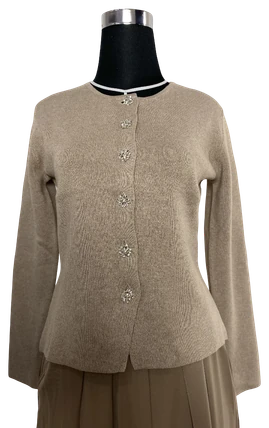
Knit cardigans
A cardigan is judged at the button band. It carries the wearer's eye, it takes the most handling, and it is the first place a badly balanced knit shows itself — the band ripples, the fronts hang unevenly, and the garment looks cheap before anyone has read the label.
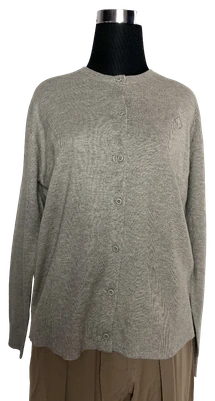
Sweaters & pullovers
An oversized sweater is not a fitted sweater cut larger. The drop shoulder moves the balance point off the shoulder seam, so the whole garment hangs from the neckline instead — and if the neck rib is knitted at the wrong tension, the body pulls the collar out of shape within a season.
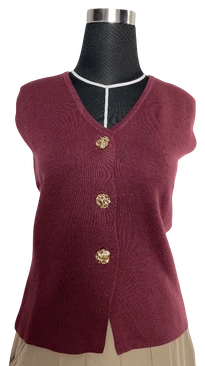
Knit vests
A vest is mostly edge. Take the sleeves off a knitted garment and the armhole, the neckline and the front band become almost the whole thing — which is why a vest exposes bad finishing faster than any other knit in a range.
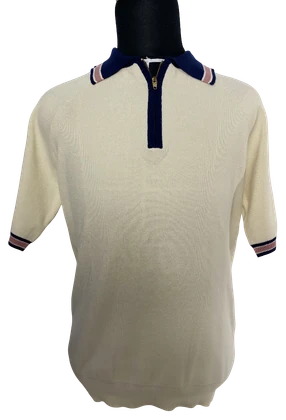
Knit polos
A knit polo is where the factory's collar work is on public display. Tipping, striping, and placket alignment all have to land within a millimetre of each other on a piece the wearer sees in the mirror every time they put it on.
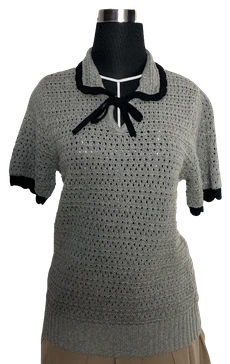
Knit tops
Pointelle and open-stitch fabrics are the hardest thing in a knitwear range to keep consistent. The holes are deliberate, which means every irregularity reads as a fault rather than as texture — and blocking, not knitting, is where they are won or lost.
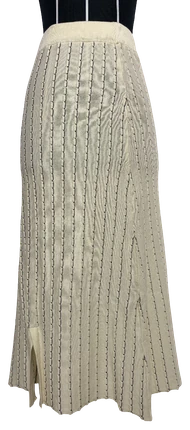
Knit skirts
A knitted skirt has one job that a knitted top never has: it must not grow. Gravity works on a vertical panel all day, and a rib that recovers beautifully at the cuff of a sweater will let a skirt drop two centimetres by the afternoon.
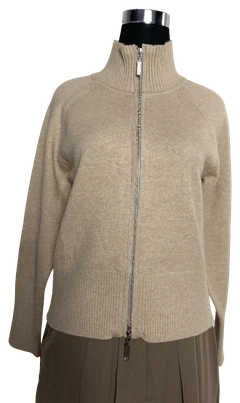
Zip-up knit jackets
Putting a zip into a knitted garment is a structural problem, not a trim problem. A zip is rigid and the fabric around it is not, so unless the band is stabilised properly the front waves — and a waving zip is the single most common reason a knitted jacket gets rejected at inspection.
Tell us what you are producing.
Send the style, the quantity and the delivery window — attach the tech pack on WhatsApp and we come back with a costed quote, not a brochure.