
Services
Knit-to-shape (fully fashioned)
Produksee produces knit-to-shape, fully fashioned knitwear in Indonesia. Panels are knitted directly to their finished outline and linked together rather than cut from yardage, eliminating cut edges and seam bulk. Used for premium cardigans, sweaters and vests where drape and finish matter.
Fully fashioned means the garment was shaped by the knitting machine, not by scissors. The decreases are worked into the fabric so the stitch line curves with the armhole — the mark a buyer looks for when deciding whether a knit is worth its price.
Comparison
Knit-to-shape against cut & sew
Cut & sew
- Panels cut from knitted yardage
- Cut edge must be overlocked, adding seam bulk
- Faster and cheaper per garment
- More yarn waste at the cutting table
- Right for volume basics and simple silhouettes
Knit-to-shape
- Panels knitted to their finished outline
- Linked seam, no cut edge, minimal bulk
- Visible fashioning marks along the shaping line
- Almost no yarn waste
- Right for premium price points and structured shapes
Application
Where it is worth the cost
Structured armholes
A linked armhole sits flat under a jacket. A bulky overlocked one does not, and it is visible through tailoring.
Fine gauge
The finer the gauge, the more a cut edge and its overlock read as a defect rather than a construction.
Expensive yarn
When the yarn is the cost driver, near-zero cutting waste changes the maths in favour of knitting to shape.
Specification
Programme terms
These figures are being confirmed with our production floor and will be published once verified.
We quote gauge, minimum order per style and per colour, yarn options, sampling turnaround and production lead time against your specific style — not from a rate card. Send a tech pack and you get all six back, costed, on WhatsApp.
- Gauge range
- Minimum order, per style
- Sampling turnaround
- Production lead time
FAQ
Frequently asked
Is knit-to-shape always better?
No. It costs more per garment and suits some silhouettes badly. For a volume basic at a sharp price, cut & sew is the right answer and we will say so.
Can one programme use both?
Yes, and it often should — a structured cardigan knitted to shape alongside a simple cut & sew tee body in the same delivery.
How do I tell which one a competitor used?
Look inside at the armhole. A line of small marks following the seam is fashioning; a bulky overlocked edge is cut & sew.
Frequently asked
Related categories
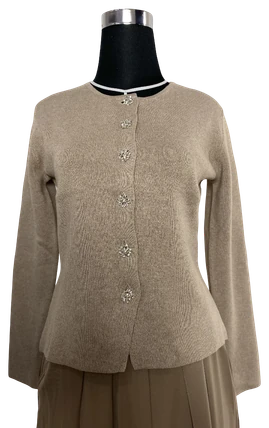
Knit cardigans
A cardigan is judged at the button band. It carries the wearer's eye, it takes the most handling, and it is the first place a badly balanced knit shows itself — the band ripples, the fronts hang unevenly, and the garment looks cheap before anyone has read the label.
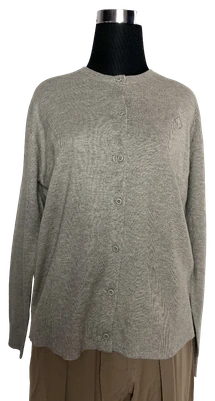
Sweaters & pullovers
An oversized sweater is not a fitted sweater cut larger. The drop shoulder moves the balance point off the shoulder seam, so the whole garment hangs from the neckline instead — and if the neck rib is knitted at the wrong tension, the body pulls the collar out of shape within a season.
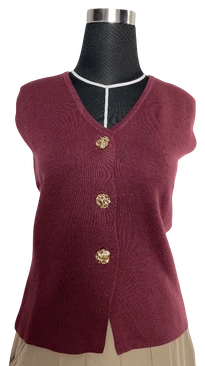
Knit vests
A vest is mostly edge. Take the sleeves off a knitted garment and the armhole, the neckline and the front band become almost the whole thing — which is why a vest exposes bad finishing faster than any other knit in a range.
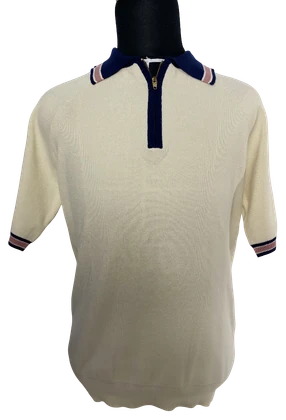
Knit polos
A knit polo is where the factory's collar work is on public display. Tipping, striping, and placket alignment all have to land within a millimetre of each other on a piece the wearer sees in the mirror every time they put it on.
Tell us what you are producing.
Send the style, the quantity and the delivery window — attach the tech pack on WhatsApp and we come back with a costed quote, not a brochure.